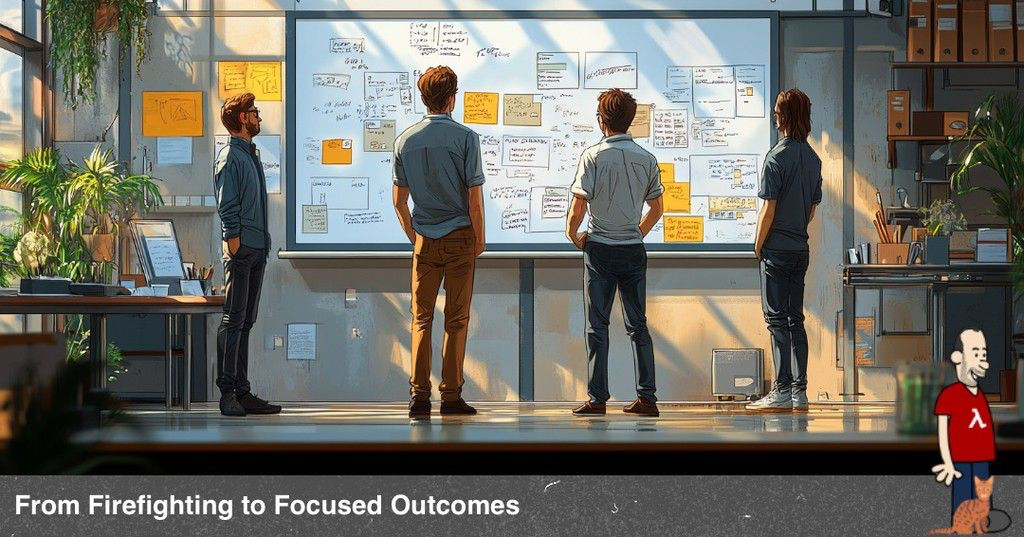
A recurring challenge in software development is the tendency to elevate urgent yet non-essential features over crucial foundational work. As Tech Managers, we must ensure our teams focus on what truly matters. In his book Clean Architecture, Robert C. Martin described this as failing to distinguish between urgent distractions and system-critical architecture. This approach leads to short-term wins but long-term structural instability.
A Tech Manager can resist that tendency by fostering a culture of thoughtful prioritization. Start by establishing clear decision-making frameworks that separate urgent yet superficial tasks from structural imperatives. For instance, encourage teams to evaluate features for their immediacy, alignment with long-term goals, and architectural integrity. Providing data-driven insights, such as impact analysis or cost-of-delay metrics, can help highlight the importance of tackling root issues rather than chasing unclear tasks without any outcome evidence.
One practical approach is embedding regular reflection points into your workflows. Hold architecture retrospectives to identify underlying system issues. Then, the capacity to address these issues and deliver customer-facing balanced features must use tools like a Kanban board to visualize the trade-offs. It builds team awareness of hidden risks and ensures continuous improvement aligns with delivering value with clear outcomes.
Tech Managers must also advocate for the importance of architecture when engaging with stakeholders. Translating technical debt or architecture needs into business outcomes fosters a shared understanding. For instance, could you explain how reducing technical debt accelerates feature delivery or improves reliability, creating a win-win for developers and business leaders?
By enabling thoughtful prioritization, Tech Managers can shift the focus from urgent distractions to building robust, scalable systems. The result? A high-performing team that consistently delivers clear outcomes without sacrificing its foundations.