Categories
Extreme Programming Fit for Purpose Kanban Programming

Recontextualizing Challenges

Recontextualizing a problem is a transformative approach that shifts the focus from micro-level analysis to a broader strategic perspective. As Thomas Wedell-Wedellsborg highlights in What’s Your Problem?, recontextualization requires asking the right questions, like, “Is this the correct issue to focus on?” instead of simply analyzing surface-level symptoms. For Tech Managers, mastering this skill can […]

Categories
Extreme Programming Fit for Purpose Flight Levels Kanban Programming Team Topologies

Applying the Principles of Extreme Ownership in Tech Management

As Jocko Willink and Leif Babin highlight in Extreme Ownership, a true leader must embody an unwavering belief in the mission. This principle is not just about confidence; it’s about conviction, clarity, and the ability to inspire others toward a greater purpose. For a Tech Manager, believing in the mission starts with deeply understanding the […]

Categories
Extreme Programming Fit for Purpose Programming

Releasability and Debt Management

Software architecture isn’t just about designing robust systems; it’s about ensuring that software is always in a releasable state. As highlighted in Software Architecture Metrics by Christian Ciceri et al., the deployment pipeline is the definitive mechanism for determining whether a system is ready for release. For a Staff Engineer, this principle isn’t just technical—it’s […]

Categories
Extreme Programming Fit for Purpose Flight Levels Kanban Programming Team Topologies

Rethinking Progress in Software Development

What defines progress in a software project? According to Alisson Vale in A Fórmula da Eficácia, progress isn’t measured by how much code is written or how fast features are delivered—it’s about solving the correct business problems. This principle challenges Tech Managers to rethink traditional success metrics and focus on delivering significant outcomes. Providing the […]

Categories
Extreme Programming Programming

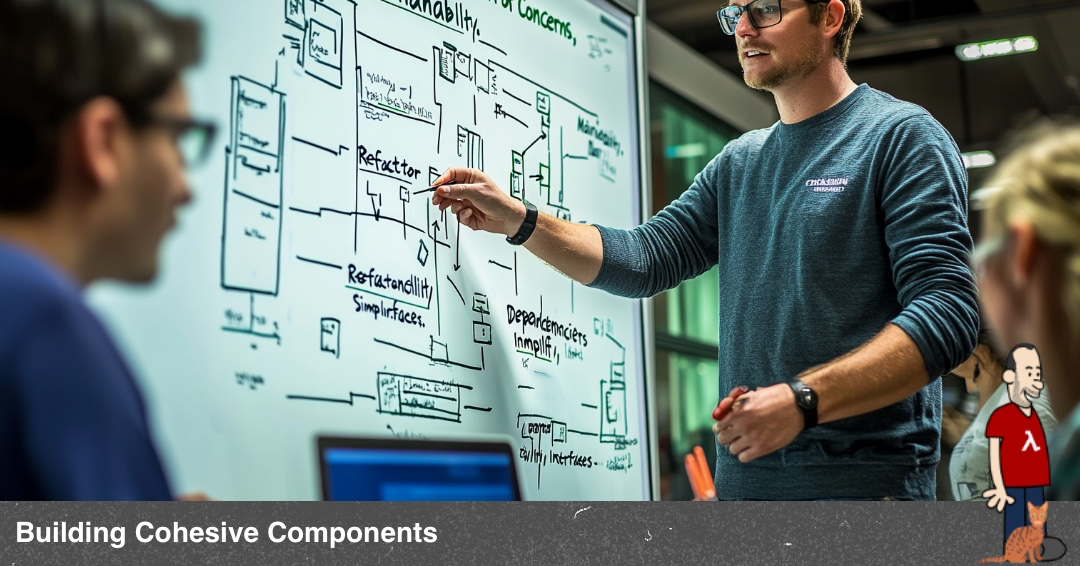
Building Cohesive Components

In Clean Architecture by Connor Wallace, the Common Closure Principle (CCP) provides a vital framework for designing highly maintainable and adaptable software components. The principle emphasizes grouping classes and modules into components based on shared reasons for change while separating those that evolve independently. This ensures that components are cohesive, minimize unnecessary dependencies, and remain […]

Categories
Extreme Programming Fit for Purpose Flight Levels Kanban Programming

How ‘Cover and Move’ Can Transform Your Tech Teams.

“Cover and Move” from Extreme Ownership by Jocko Willink and Leif Babin is a critical reminder: success isn’t achieved in isolation. It’s about teamwork, collaboration, and breaking down silos. For Tech Managers, this principle is a call to action to foster a culture where departments and teams mutually support one another, aligning efforts toward the […]

Categories
Extreme Programming Fit for Purpose Flight Levels Kanban Programming Team Topologies

Building Performance, Not Buying It

Achieving high performance in technology organizations is not about shortcuts or off-the-shelf solutions. As Nicole Forsgren, Jez Humble, and Gene Kim emphasize in their book Accelerate, proper performance comes from developing capabilities tailored to your unique context, goals, and challenges. This path requires deliberate effort, focus, investment, and—above all—time. For Tech Managers, this principle is […]

Categories
Extreme Programming Fit for Purpose Programming

Building Resilient Systems with Dependency Inversion Principle

Adaptability and security are crucial in software development, especially in a rapidly changing ecosystem of libraries and frameworks. A perfect example is when a commonly used library changes its licensing terms—say, a PDF generation library switching to AGPL-3, which introduces legal complexities. The Dependency Inversion Principle (DIP), a core tenet of SOLID principles, provides a […]

Categories
Fit for Purpose Kanban

Empowering Teams Through Humility and Collective Vision.

Ego is a double-edged sword in leadership. On one hand, it can drive ambition and excellence, pushing individuals and teams to surpass expectations. Conversely, when unchecked, it can cloud judgment, disrupt collaboration, and derail projects. For Tech Managers, recognizing and controlling their egos and addressing their teams’ egos is essential to fostering a culture of […]