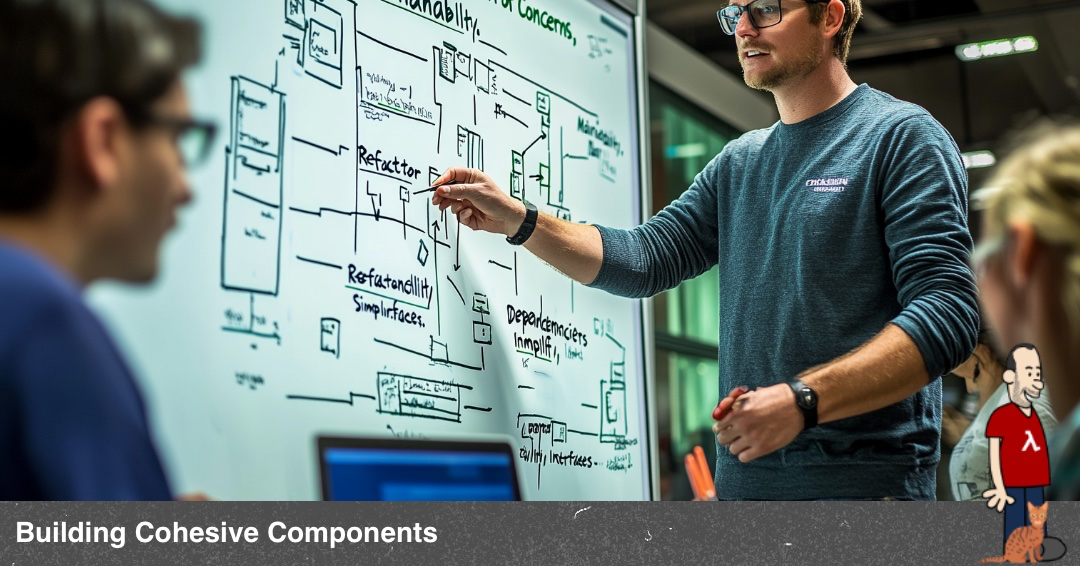

In Clean Architecture by Connor Wallace, the Common Closure Principle (CCP) provides a vital framework for designing highly maintainable and adaptable software components. The principle emphasizes grouping classes and modules into components based on shared reasons for change while separating those that evolve independently. This ensures that components are cohesive, minimize unnecessary dependencies, and remain flexible to accommodate changes. For Staff Engineers, mastering this principle is essential to crafting coherent and resilient architectures that can withstand evolving business needs.
One of CCP’s key insights is that components should not have multiple reasons to change. A Staff Engineer can implement this by carefully analyzing the potential drivers of change—whether from business logic, regulatory requirements, or performance improvements—and grouping classes accordingly. This ensures that all the classes in a component change for the same reasons and simultaneously reduces the ripple effects of modifications, keeping the system more stable and predictable.
Another critical application of CCP is avoiding forcing component users to do unnecessary things. This principle simplifies the dependency graph and enhances the usability of components for other teams and services. Staff Engineers can enforce this through rigorous code reviews and clear design guidelines, ensuring each element has a well-defined interface contract and that implementation details are hidden behind abstractions. This makes the architecture more straightforward to maintain and extend.
CCP also highlights the importance of maintainability over reusability in most applications. While reusable code is valuable, maintainable code is essential for long-term success. As a Staff Engineer, you can embed this philosophy by prioritizing clean, readable, and well-documented components over attempting to generalize prematurely. Emphasize creating components that are easy to test, debug, and modify, empowering your team to respond quickly to changing requirements without introducing unnecessary complexity.
By championing CCP, Staff Engineers can cultivate an architecture that evolves gracefully. Through mentorship, hands-on workshops, and proactive leadership in architecture discussions, you can guide your teams to design systems where changes are isolated, deployments are streamlined, and dependencies are minimized. This improves the technical quality of the software and aligns the system with broader business goals, delivering value with consistency and efficiency.