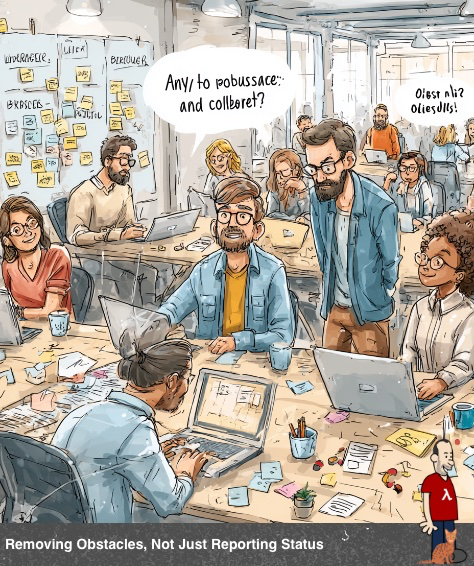
Status meetings often start with a ritual round-robin: “How’s it going?” Everyone nods, issues remain hidden, and the real blockers surface only when deadlines slip. The core problem isn’t lack of effort—it’s lack of helping questions. As Johanna Rothman and Esther Derby note in Behind Closed Doors, switching from neutral check-ins to offers of concrete assistance (“Do you need anything?” “Which obstacle can I remove?”) flips the focus from passive reporting to proactive support. When leaders frame conversations this way, teams feel safe exposing risks early, and delivery flow improves before firefighting begins.
What we learn is that a question’s power lies in the intent behind it. A neutral “How are you?” can sound like surveillance; a helping question signals partnership and shared ownership. The difference shapes culture: one breeds silence and rework, and the other invites candor and continuous improvement. By modeling curiosity and service, managers lower the cost of raising a flag—exactly what lean flow and DevOps pipelines rely on.
Action Plan for Tech Managers
1. Re-script daily stand-ups. Replace “What did you do yesterday?” with “What’s the next risk and how can we resolve it together?”
2. Create a visible impediment board. Any blocker older than 24 hours must have an owner and a targeted removal action.
3. Time-box obstacle removal. Treat impediment resolution like a user story with its own WIP limit and lead-time goal; celebrate cycle-time wins.
4. Coach upward. Encourage directors to ask you the same helping questions, reinforcing a culture of service across layers.
Within a few sprints, you’ll notice shorter feedback loops, increased psychological safety, and fewer surprises in release readiness reviews. Teams that expect leaders to clear the path spend more energy on delivering value and less on navigating organizational traffic jams.