Many organizations struggle with stagnation in their day-to-day processes, where teams feel they are merely “going through the motions” rather than genuinely advancing. A central problem arises when teams lack a deliberate routine to turn minor improvements into ingrained habits. In O Projeto Fênix, Sensei Rother’s “Melhoria Kata” underscores the power of repetition and habit-building to achieve mastery. Without a clear, repetitive practice routine, even the most skilled professionals can hit a plateau, leaving critical workflow bottlenecks unresolved for far too long.
A key lesson here is that practice doesn’t just build skill—it cements behavior. Think about elite military forces or top-tier athletes: they continuously train fundamental techniques to the point where excellence becomes second nature. The same principle applies to tech teams. By setting aside even a few minutes daily to refine existing processes, teams can develop an instinct for problem-solving. These micro-experiments compound over time, significantly improving workflow efficiency and product quality. Improvement Kata is not a one-off tactic but a long-term strategy for continuous growth and adaptability.
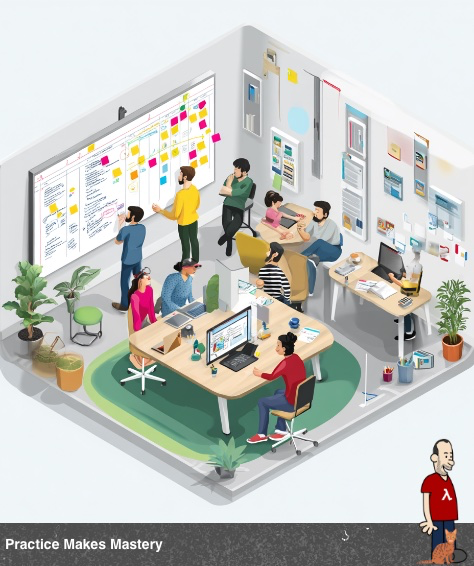
For a Tech Manager aiming to cultivate this mindset, establish small, structured practice sessions like daily stand-ups and schedule brief “Kata moments” where each team member identifies a challenge and proposes a quick, measurable experiment to address it. Encourage them to document successes and failures in a shared space—like a Kanban board or a project wiki—so the team learns from every attempt. Over time, these short practice cycles become a natural part of your workflow, fortifying a culture that anticipates issues and adapts swiftly.
Ultimately, implementing Improvement Kata is not just about refining techniques but embedding a habit of perpetual learning. When your team regularly pinpoints pain points and systematically tests solutions, you create an atmosphere of proactive problem-solving. This heightened awareness and responsiveness lead to smoother delivery pipelines, happier customers, and a resilient organization ready to face future challenges head-on.