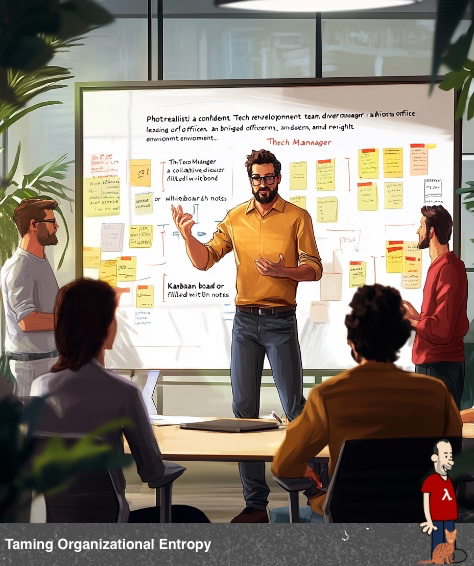
“Entropy is always increasing in the organization,” write Tom DeMarco and Timothy R. Lister in Peopleware. This simple yet profound statement highlights a common problem: teams often drift into chaos when processes are unchecked, and organizational structures gradually become more convoluted. In fast-paced tech environments, this entropy manifests as communication gaps, duplicated work, and a lack of clear ownership. The question for Tech Managers is how to combat this gradual disorder and maintain a culture of clarity and purpose.
A key lesson from Peopleware is that organizational entropy doesn’t just happen—it grows when leaders fail to address inefficiencies and conflicts early on. By acknowledging that disorder is inevitable, you can proactively set guardrails to minimize its impact. This means continuously revisiting team structures, workflows, and goals. It also implies creating an environment where honest feedback is encouraged and minor issues are resolved before they escalate. The willingness to tackle friction points promptly is a hallmark of a healthy, self-correcting organization.
The next step is to take deliberate action. As a Tech Manager, establish regular retrospectives focused on spotting early signs of entropy: Are team members unclear about their roles? Are project milestones consistently slipping? Do communication channels feel fragmented? Once these signals are identified, use collaborative problem-solving sessions to realign on goals and clarify responsibilities. You can also adopt agile methodologies or Kanban-style boards to visualize workflows and make hidden bottlenecks more apparent. Doing so turns entropy into an opportunity for continuous improvement rather than a downward spiral into chaos.
Managing organizational entropy is not about achieving a perfect order but fostering resilience and adaptability. When you empower your team to detect and address minor problems early, you build a culture that thrives on transparency, collaboration, and iterative growth. Over time, this approach reduces stress, enhances productivity, and helps everyone focus on meaningful work instead of firefighting. Embrace entropy as a natural force and transform it into the spark that drives your team’s evolution.